People sometimes ask whether the glass in Steve Gray’s kaleidoscopes is handmade or bought ready-made. It’s a fair question, and the honest answer is: it depends on the piece. But when Steve is creating something he really cares about (the kind of work that ends up in a collector’s hands) the glass is lampworked by hand, often with dichroic elements, and no two pieces come out the same.
That’s not a limitation. That’s the whole point.
What lampwork glass actually is
Lampworking means using a torch flame to melt glass rods and shape them while they’re molten. It’s a slow, deliberate process that rewards patience and punishes rushing. The glass responds to heat in ways that are partly predictable and partly not. Skilled artists learn to work with that unpredictability rather than against it, and over time those unexpected moments become some of the most interesting things in a finished piece.
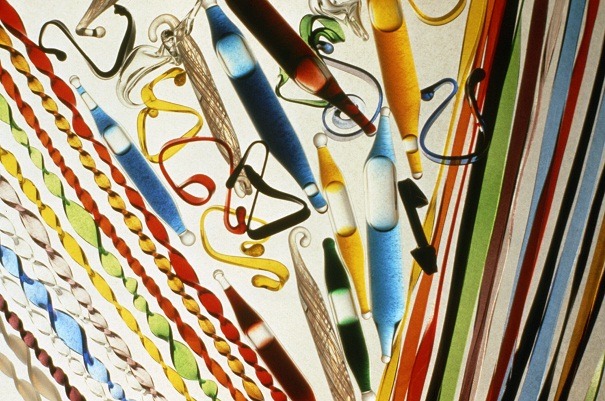
The customization goes well beyond choosing a color. Steve is making decisions about how colors interact at temperature, how the glass flows under pressure, how air moves through hollow sections, and how surface textures catch light differently depending on the viewing angle. It’s part chemistry, part physics, and part instinct built up over years of working with glass that didn’t always cooperate.
Where dichroic glass comes in
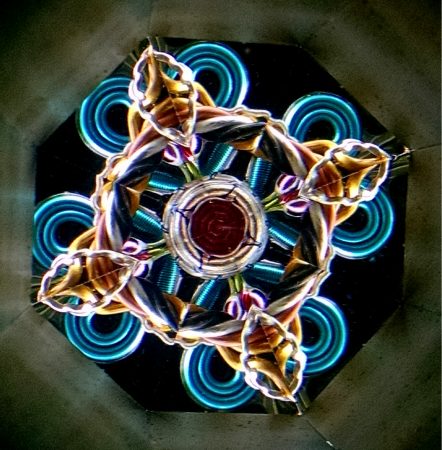
Steve’s kaleidoscope work combines lampwork with dichroic glass. This is where things get genuinely interesting for collectors.
Dichroic glass is made by fuming metals onto a glass surface, which creates a coating that shifts color depending on how light hits it and what angle you’re viewing from. The effect is almost holographic. The same piece of glass can look deep blue from one angle and flash gold from another. When you put that inside a kaleidoscope, you get a viewing experience that changes every time you move it.
Incorporating dichroic elements into lampwork isn’t a simple process. The timing has to be right, the temperatures have to be controlled carefully, and the positioning of each element within the piece affects the final light effects in ways that can be anticipated but never fully predicted. That unpredictability is a feature, not a bug. It’s what makes each piece a genuinely unique optical experience.
Why mass production can’t get here from there
Factory glass is designed to eliminate variation. Every piece comes out of a mold to match precise specifications. That’s exactly what mass production is supposed to do, and it does it well for what it is.
But it means that every piece is identical to every other piece, which is the opposite of what makes handmade lampwork interesting.
The subtle asymmetries, the color shifts that happen when two glasses blend under heat, the surface textures that form as the glass cools… These are the things that make a handmade piece what it is. You can’t program them into a machine, because they emerge from a thousand small decisions made in real time: how the artist holds the rod, how they read the heat, what they do when the glass moves in an unexpected direction.
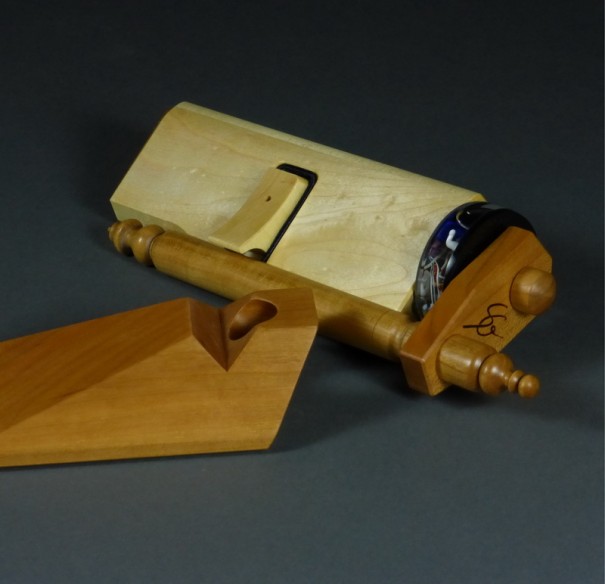
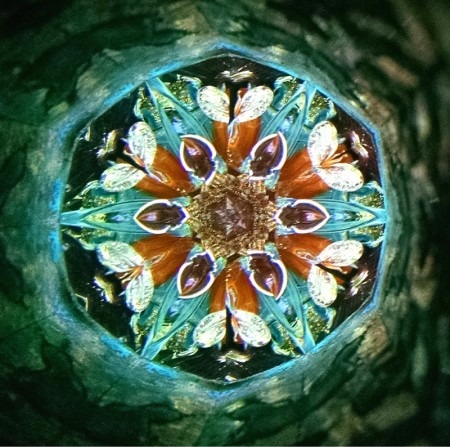
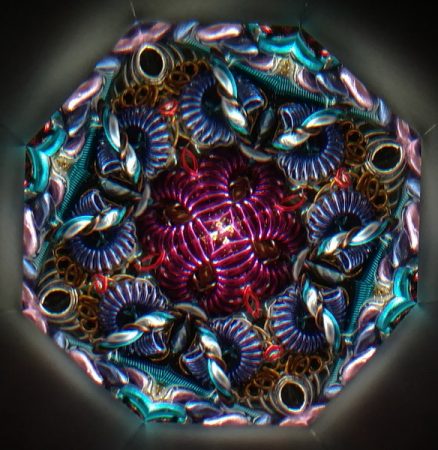
Steve has been developing his kaleidoscope techniques long enough that certain things have become signatures: his ways of handling color transitions, approaches to layering dichroic elements, methods for creating the object chamber that produces the patterns you see when you look through the scope. A collector who’s familiar with his work can usually spot a piece without seeing his name on it. That kind of recognizability takes years to develop and can’t be shortcut.
The chemistry side, which most people don’t think about
One of the less glamorous but genuinely important parts of lampwork is understanding how different glasses behave together. Not all glass is compatible. Different compositions expand and contract at different rates as they heat and cool, which means incompatible glasses will eventually crack, sometimes right away and sometimes weeks later.
Getting this right requires knowing the coefficient of expansion for the glasses being used and thinking carefully about which combinations will hold up over time. It also means annealing finished pieces properly. It means cooling them slowly in a kiln to relieve the internal stress that builds up during the torch work. Skip that step or rush it and you risk destroying hours of work.
Mass production shortcuts this because it works with standardized materials that behave predictably. Handmade lampwork doesn’t have that luxury, but gains something in return: the ability to work with a much wider range of materials, colors, and combinations… some of which produce effects that simply aren’t possible any other way.
What this means for collectors
When someone adds one of Steve’s kaleidoscopes to their collection, they’re not buying a decorative object that came off a production line. They’re buying a piece that reflects specific decisions made during specific torch sessions, with specific materials that behaved in specific ways on that particular day. That piece doesn’t exist anywhere else in the world.
That’s partly why handmade lampwork commands the prices it does, and why serious collectors treat these pieces as appreciating assets rather than just pretty things to have on a shelf. The value isn’t just in the materials or the hours of labor. It’s in the one-of-a-kind nature of the object and the skill and knowledge that produced it.
There’s also something worth saying about what gets lost when traditional crafts disappear. The techniques behind quality lampwork are passed down through apprenticeships, workshops, and years of hands-on practice. They’re not written down in a way that could be recovered easily if the community of practitioners gets too small. Supporting handmade artisan work, whether that’s buying a piece, attending a show, or simply spreading the word about artists whose work you admire, helps keep those techniques alive.
The short version
Mass-produced glass is consistent, affordable, and perfectly fine for what it is. Handmade lampwork is none of those things. It’s variable, time-consuming, and priced accordingly. But it’s also alive in a way that factory glass isn’t. You can see the decisions in it. You can see where the artist’s hand was.
That’s what Steve puts into every kaleidoscope he makes. Take a look at the scopes available in the Etsy store if you’d like to see what that looks like in practice.
