Most people who get serious about collecting kaleidoscopes quickly discover that pricing in this market is not arbitrary. There is a logic to it. Certain factors reliably push prices up, others reliably pull them down, and understanding which is which saves a lot of money and frustration over time.
This is not a market where you can rely on general collectibles instincts. A kaleidoscope is simultaneously an optical instrument, a work of decorative art, and in the best cases a piece of functional sculpture. The factors that drive value reflect all three of those identities.
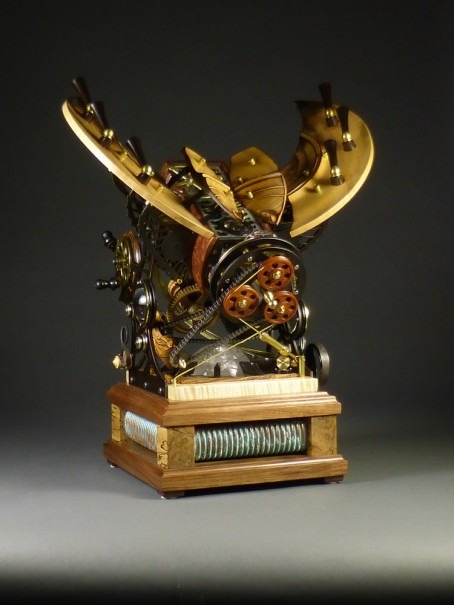
Rarity is the foundation
As with most collectible categories, scarcity is the primary driver of value. The fewer examples of a piece that exist, the more collectors are willing to pay for one. This naturally applies to antiques (Nineteenth-century instruments survive in limited numbers regardless of original production) and to contemporary work when artists deliberately limit editions.
Mary Margaret Gibson developed a condition and rarity scale that has become the standard reference for serious collectors. By her framework, pieces with 11 to 25 examples qualify as scarce, 6 to 10 as rare, 2 to 5 as very rare, and one-of-a-kind pieces sit at the top of the scale. Understanding where a piece falls on that spectrum is one of the first things an experienced collector will want to know.
Edition documentation matters here. A signed piece with a numbered certificate from the artist is worth considerably more than an identical unsigned example (typically in the range of 20 to 40 percent more) because the documentation provides verified authenticity that the market values consistently.
Artist reputation carries a lot of weight
In the contemporary segment of the market, artist reputation is probably the single most important factor after rarity. Exhibition history, juried show recognition, gallery representation, and secondary market track record all contribute to how a collector evaluates an artist’s work.
Artists who combine multiple technical disciplines tend to command stronger prices. Glassblowing, metalworking, and woodworking each require years of practice to develop. An artist who works competently across all three, integrating them into a unified piece, is demonstrating a level of skill that limits the field considerably.
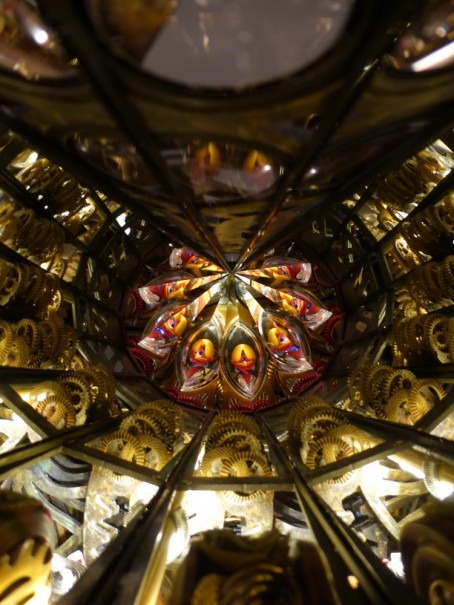
Steve Gray’s work is a good example of how technical breadth translates into collector interest. His pieces combine precision woodworking with lampwork glass and dichroic elements in ways that reflect deep knowledge of each discipline. His recent piece the Pegascoptylus takes that further. It positions the kaleidoscope as part of a larger integrated system rather than a standalone hand-held object, which expands what collectors can look for and is opening up a segment of the market that is growing steadily among niche enthusiasts.
Provenance and documentation
A piece with a complete paper trail is worth more than an identical piece without one. This is true across virtually every serious collectible category and it applies to kaleidoscopes as much as anywhere.
Useful documentation includes the original purchase receipt, an artist certificate, exhibition catalog appearances, previous ownership records, and condition reports from recognized appraisers. For antiques, any restoration work should be documented as well. Future buyers will want to know what has been done to a piece.
Insurance appraisals serve double duty here. They protect the collection and establish a professional valuation that supports pricing in future sales. Collectors building serious investment-grade collections prioritize acquiring pieces with complete documentation from the start, because retrofitting provenance later ranges from difficult to impossible.
Condition — the five-tier standard
Gibson’s condition scale runs from poor through good, very good, excellent, and mint, with a separate designation of new for unplayed examples in original packaging. Mint and new pieces command the highest premiums, and the difference between excellent and mint condition can translate to a meaningful price gap in the secondary market.
For optical instruments specifically, condition assessment goes beyond the exterior. Mirror alignment needs to be intact, viewing lenses clear and undamaged, and the object chamber functioning as designed. A beautiful exterior on an instrument with compromised optics is still a compromised instrument, and experienced collectors know to look inside before making any serious purchase decision.
Technical quality and materials
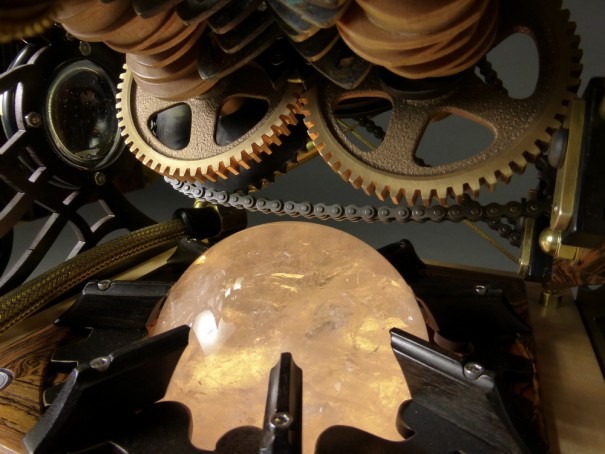
Construction quality has a direct relationship with long-term value. Pieces built with premium materials, proper joinery, quality finishes, and robust mechanical systems hold up better over time and maintain their collector appeal. Shortcuts in construction tend to show up eventually, and they show up in resale prices.
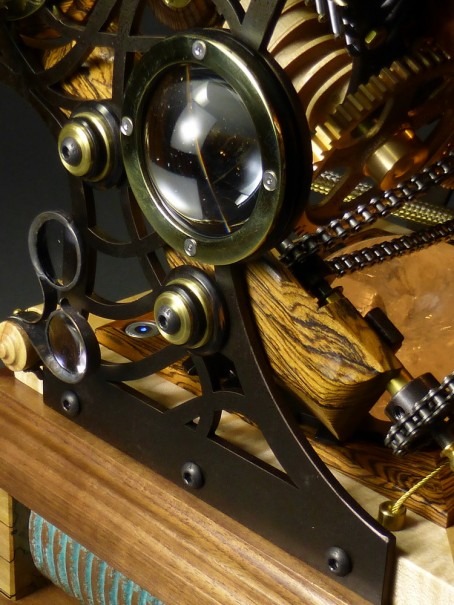
Hand-worked elements add particular value. Custom lampwork glass objects in the viewing chamber, precision-machined components, and integrated decorative work in the body all signal serious artistic intent that collectors recognize. Technical innovation in the mirror system (two-mirror versus three-mirror configurations, for example, or unconventional mirror angles that produce unusual symmetry patterns) can also elevate a piece’s position in the market.
Where the market sits right now
Entry-level contemporary pieces generally start around $200 to $500. Mid-range work from recognized artists with exhibition history can run into the several thousands. Antique pieces from notable historical makers, names like Baird and Tatlock or Charles G. Bush, regularly exceed $5,000 for museum-quality examples, and exceptional pieces at auction can go considerably higher.
Secondary market data from platforms like eBay and specialty sites like 1stDibs shows consistent trading activity across price points. Recent art market reporting indicates that sell-through rates across decorative arts and collectibles reached a three-year high through 2024, which suggests reasonably healthy market conditions for quality pieces.
One trend worth noting is that collectors in the 30 to 45 age range now account for a significant share of high-end collectibles spending, and this group tends to expect detailed online documentation, quality photography, and video demonstrations of optical effects before committing to a purchase. Artists and dealers who provide that kind of presentation have a real advantage with this buying segment.
Building a collection with investment value in mind
The collectors who tend to do well over time in this market share a few habits. They research before they buy, focusing on artist reputation, condition, and documentation rather than impulse. They keep detailed records of every acquisition. They store pieces properly, in a controlled environment, with stable temperature, and away from direct sunlight. And they are patient, building positions gradually rather than trying to time the market.
Specialization also tends to produce better results than broad accumulation. Collectors who focus on a specific period, a particular artist, or a defined category develop the expertise to recognize value that generalists miss. That knowledge compounds over time in ways that tend to show up in both the quality and the value of the collection.
Take a look at the gallery to see examples of the kind of craftsmanship and technical detail that the collector market rewards.